



















The Hyde Park Lodge as soon as commanded the intersection of Hyde Park Boulevard (51st Road) and Lake Avenue, a chic landmark between two communities. The principle facade confronted the north towards trendy Kenwood, whereas to the south was the more and more industrial district of Hyde Park. The positioning of this resort modified vastly over the following years – following city renewal it was changed by a small, suburban-style procuring middle because the enterprise areas of Hyde Park have been modernized. That too has been changed, by one other imaginative and prescient of the Hyde Park neighborhood.
A half-century after the Hyde Park Lodge got here down within the identify of progress, a multifamily residential venture supposed to “invigorate one in all Hyde Park’s most essential gateways” was unveiled for neighborhood approval early in 2013. Architect Jeanne Gang commented that the brand new venture’s most essential ingredient was its “urbanism,” as she sought to orient the venture towards the encompassing public areas so as to encourage a lot wanted vitality on the road degree.
Vitality is what outlined the Hyde Park Lodge. The constructing had been constructed in a number of levels for Paul Cornell by Starrett & Fuller. The primary part of the resort dates to 1888; it was a pressed brick and stone constructing, 80-feet-by-85-feet, rising 4 tales in top. All the time with an eye fixed towards the long run, Cornell had the partitions constructed sturdy sufficient to accommodate further tales.
Theodore Starrett was not an architect by coaching, however a structural engineer who labored with Burnham & Root. He partnered with George Fuller for building of this constructing and it was a pioneer in resort design. The primary iron-framed building within the metropolis, the electrical lights, electrically operated elevators, phone service and steam warmth have been all thought-about revolutionary for accommodations of the time.
One other three flooring of the resort have been below building by 1892, in anticipation of the Columbian Exposition. The impression of the honest on the neighborhood was profound, as this was however one of many luxurious accommodations that rose to accommodate the massive variety of anticipated guests.
A view of the Hyde Park Lodge, with the addition of three tales to the unique four-story construction and an annex to the south. Paul Cornell’s home stood on the nook lot to the west, barely seen on the proper on this picture.
Rounded bays on the corners of the resort enlivened the oblong crimson brick facade, whereas offering well-lit inside rooms. The luxurious skylit foyer was paneled in marble and company tread upon lush carpets. Dinner was served below a Tiffany glass ceiling; nobody was permitted within the 500-seat eating room with out formal apparel, enhancing the already elegant setting. When the annex was accomplished in 1915, the Hyde Park Lodge practically doubled its dimension, offering over 300 visitor rooms. The property remained in Cornell’s household lengthy after his dying, and was bought by his property in 1947.
By 1925, the world surrounding the Hyde Park Lodge was densely occupied and much much less unique, as demonstrated by the addition of enormous parking garages, a number of dry cleansing institutions and a sheet steel store seen on this portion of the Sanborn Hearth Insurance coverage Atlas.
From the time it opened till the Thirties, the resort represented fantastic dwelling, excessive trend and class. Nonetheless, by 1962 the resort had served its function; its luxurious eating room had grow to be a cafeteria and visitor rooms had been minimize into kitchenette residences. Deemed too pricey to revive, the resort that was for years the final word in luxurious was slated to be demolished below the Hyde Park City Renewal Plan. Residents moved on and rooms have been stripped naked of their furnishings. The Hyde Park-Kenwood Group Convention wistfully collected chandeliers, terracotta items and even a staircase, reminiscences of an period long gone.
After the resort was razed the land lay vacant till The Village Heart strip mall was accomplished in 1969. The ability supplied residents an A&P Grocery store (later Village Meals), the Unique Pancake Home, a drug retailer and liquor retailer. All constructions have been demolished in 2014.
As planning for a brand new residential constructing on the location started, a lot had modified since Cornell erected his resort. The improvements of that earlier period — steam warmth, name bells, and splendid eating rooms — have been changed by considerations for the surroundings, sustainability and affordability. Metropolis Hyde Park, the identify for the newest venture to occupy the location, was erected on the vacated strip mall in 2015. The venture was LEED-certified; designed to mix “environmental, financial and occupant-oriented efficiency” right into a inexperienced constructing. The architect of the venture, Jeanne Gang, additionally remarked that the structure of Chicago’s giant buildings is “all concerning the construction,” and Metropolis Hyde Park is not any exception. The expression of the constructing’s concrete body is enhanced by a sequence of balconies that create an brisk, tactile facade.
The Chicago Seashore Lodge stood the east of the 51st Road intersection alongside the lakefront. It was erected in 1892, most probably by the agency of Starrett & Fuller, and the construction pictured above was demolished in 1927.
A block east of the 51st/Lake Park intersection was the location of one other of the early giant constructions constructed in Hyde Park, in an space then described as “sand waste.” In the course of the summer time of 1892, excavation started and the concrete basis was laid for what was anticipated to be the best resort resort on the lakeshore, the Chicago Seashore Lodge. (Little question, Paul Cornell would have disagreed).
Backed by buyers, Kenwood resident Warren F. Leland directed the design and building of the six-story resort, one in all Chicago’s largest resorts for each everlasting residents and transient company. Leland got here from a widely known household of resort proprietors and had a protracted profession. His resort was elegant — an inside rotunda of 148-feet-by-52-feet welcomed guests to the resort, which was surrounded by a protracted veranda overlooking the lake and Cornell (Harold Washington) Park. On the north, the shoreline made a sweeping curve and the wading seashore stretched 500 ft into the lake, with a view north towards the enterprise district.
The resort not solely supplied company lovely environment, but additionally an abundance of actions: there have been walks and drives, crusing, swimming, golf, tennis, strolling, tally-ho rides, dancing and stay music. Leland launched many new options to resort life, together with serving meals from 5:00 o’clock till late at night time within the eating room, the place one might look out over miles of open water whereas having fun with luxurious meals. Boardwalks and cabanas have been available in the summertime months on the seashore, and Morgan’s Pier was used as a ship touchdown.
The sweeping curve of the shoreline and wading seashore close to the Chicago Seashore Lodge weren’t essentially as supposed by nature. These boardwalks and cabanas owed their sandy perches to the ingenuity of 1 James Morgan. Unknown to these touchdown at Morgan’s Pier, the construction had supplied a most totally different service. The unique shoreline was fairly a distinct place, with room for however a single residence, that of Dr. Jacob Bockee. He constructed on a desolate sandy parcel (at what’s now Cornell and fiftieth Streets) earlier than leaving for service within the Civil Warfare.
By 1873, James and Rebecca Morgan acquired the Bockee home, and it was moved to a brand new location overlooking the park right now often called Harold Washington Park. An ingenious fellow, Morgan then improved the parcel north of 51st Road. In response to the April 3, 1910, Chicago Tribune, “In regards to the time of the Chicago fireplace, James Morgan bought a tract of three acres of land north of 51st Road and east of the Illinois Central tracks. . . . Regardless of the continuous washing away of the shore lands, this specific tract now incorporates 11.52 acres, or a rise of practically 8 acres in thirty-nine years.” Morgan made this land by means of a easy technique. With a “pile driver, a crew of males, just a few boats of lumber,” he constructed a sequence of piers. Morgan stored a clamshell dredge busy taking sand from the surface these constructions and dumping it on the within, a fast and cheap means of creating land that he claimed as his.
A 1910 Chicago Day by day Information picture of the Hyde Park lakefront trying north. The Chicago Seashore Lodge seems to the left, with Morgan’s Pier on the proper.
The newly made land wasn’t precisely scenic. When residents of the Boat Membership needed to erect a boathouse on the lakefront in 1886, the Hyde Park Herald famous that the situation of the shoreline was hardly idyllic. Morgan had left his worn out pile driver there to rot, the shell of Paul Cornell’s previous resort stood as fire-blackened ruins just a few blocks south, and the stays of an previous tin manufacturing facility solely elevated the variety of eyesores.
That every one started to vary, when in 1892 planning for the World’s Truthful started. Morgan leased the west 400 ft of his tract to the Chicago Seashore Lodge Firm and building of an expensive lakefront resort started.
The resort was an incredible success. Nonetheless, controversy arose in 1912 when the South Park Board took steps to meet Daniel Burnham’s plan to enhance Chicago’s lakefront. Condemnation proceedings started towards all lakefront property homeowners to compel them to launch their littoral rights. (The homeowners of waterfront properties didn’t personal the water itself, however as an alternative loved the proper to make use of Lake Michigan and its floor as they desired.)
The Illinois Central managed the land from twelfth Road south to fiftieth Road. The stretch from 51st to 53rd had been given to town by Paul Cornell for use in perpetuity for a public park; 53rd Road to 54th Road was owned by Harry W. Sisson & Associates and was occupied by the condo resort of the identical identify. T. A. Collins owned 600 ft south of 54th, and Fanny Bregh owned the remaining footage to fifty fifth Road. H. R. Shedd owned from fifty fifth to 56th. All launched their rights to the lakefront besides the Chicago Seashore Lodge — the property between fiftieth and 51st Streets remained in litigation till 1926, when the resort firm lastly gave up their littoral rights in change for the massive piece of land north of the resort grounds.
Within the midst of litigation, the development of a thirteen-story 550-room addition was introduced in 1919. Morgan certainly made a sensible enterprise enterprise along with his manufacture of sandy landfill; the proprietors of the resort bought 12 acres for the resort addition from Morgan’s daughter for $500,000 — in money.
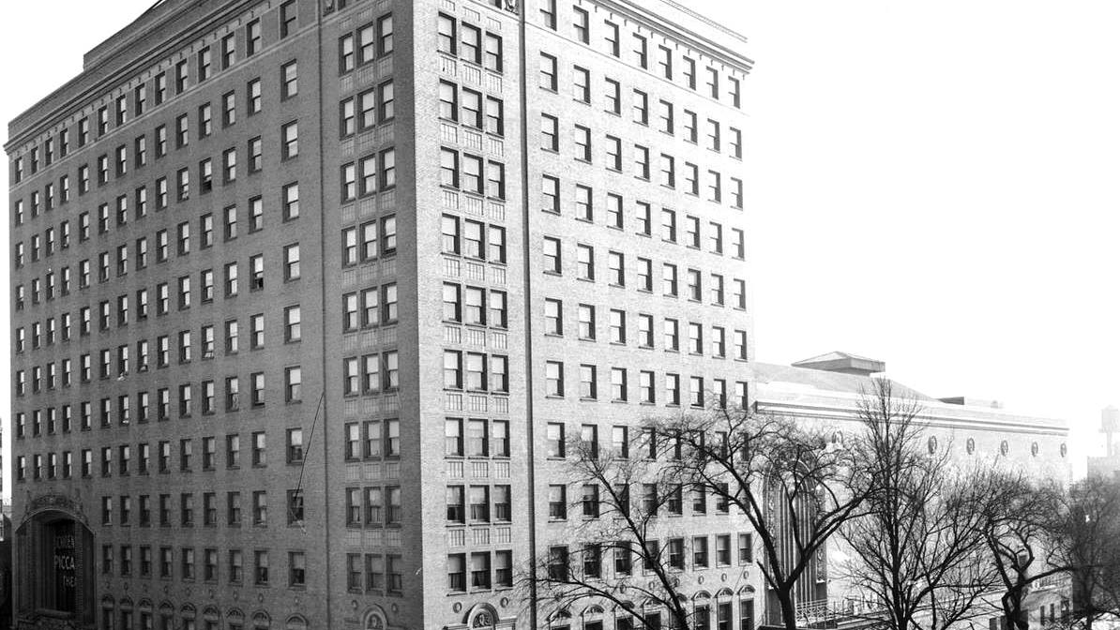
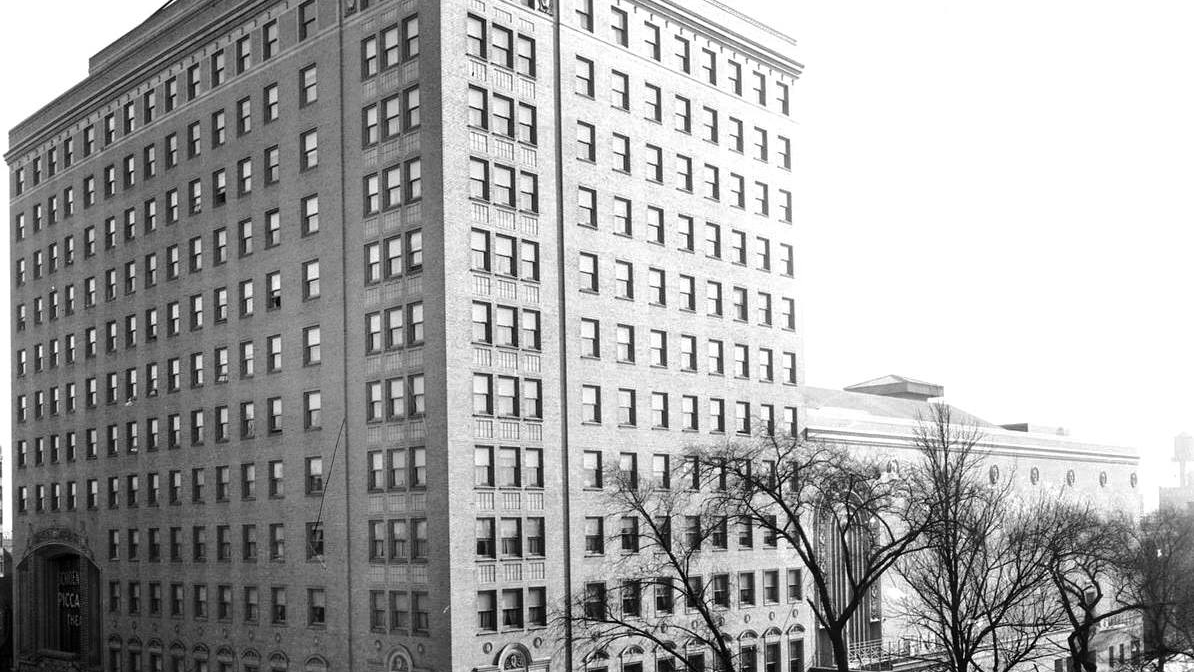
West of this storied website was Paul Cornell’s home, constructed on Harper Avenue, when he first developed the neighborhood now often called Hyde Park. 51st Road west of the intersection was then a quiet unpaved road, with homes sparsely positioned. Within the ensuing years the neighborhood grew; homes after which residences got here to line the avenue. Within the early months of 1920 staff demolished a number of three-flat buildings on the southeast nook of Hyde Park Boulevard and Blackstone Avenue. A multi-use constructing rose on the location, named the Piccadilly.
George and Cornelius Rapp designed the Piccadilly Theater and Residences in 1926. The theater stood on the rear of the condo constructing and was demolished in 1972.
Residences and ground-floor outlets have been housed throughout the 14-story Piccadilly constructing, the place leisure magnate Herman Schoenstadt resided in a top-floor luxurious suite through the Thirties and 40s. The Schoenstadt household opened one of many largest theaters on the South Aspect within the construction and the Piccadilly Theater rapidly turned the flagship of their theater chain.
The theater stood on the rear of the condo constructing till demolished in 1972. Though that portion of the location is now a car parking zone, the Rapps’ two-story foyer stays, tucked away behind the shuttered 51st Road entrance, pictured within the twenties above. Be aware the home from an earlier period to the left within the picture.
In the course of the roaring twenties new venues of various sizes opened to cater to residents with disposable earnings and elevated leisure time, in addition to for guests who got here to benefit from the lakeshore. The Rapp brothers designed the most important of those elaborate leisure palaces, the Piccadilly Theater on Hyde Park Boulevard, becoming a member of the neighborhood’s Frolic and Kenwood film palaces. With its 2,500 seats and elaborate interiors, the “Pic” served the whims not solely of the prosperous and the center class.
Architects believed the film home to be a terrific social equalizer — comparatively cheap leisure out there to all courses. “Watch the brilliant lights within the eyes of the drained store woman who hurries noiselessly over carpets and sighs with satisfaction as she walks amid furnishings that after delighted kings and queens,” commented architect George Rapp.
Cinema palaces of the period usually featured a number of frequent components, together with a projecting marquee and huge, elaborate foremost foyer. The Rapps’ design for the Piccadilly was barely totally different; the marquee was flush with the Hyde Park Boulevard facade, with an unlimited window above it trimmed in terracotta. To compensate for the shortage of an unlimited foyer, the Rapps designed a double-height area with a small mezzanine above, giving the phantasm of grandeur to patrons coming into to the sounds of a piano and harp. The drama didn’t finish there; the auditorium was the spotlight of the constructing, designed in an ornate French Renaissance fashion. The luxurious inside was embellished with vintage furnishings, oil work, and copies of historic sculpture the Schoenstadt household introduced again from their many travels.
Within the ensuing years because the neighborhood modified, attendance declined and the theater closed in 1963. The College of Chicago bought the property and 9 years later the theater was demolished. The condo constructing stays and though the theater is now a car parking zone, traces of its former glory stay etched on the south wall of the construction — fading reminders of a bygone period.